
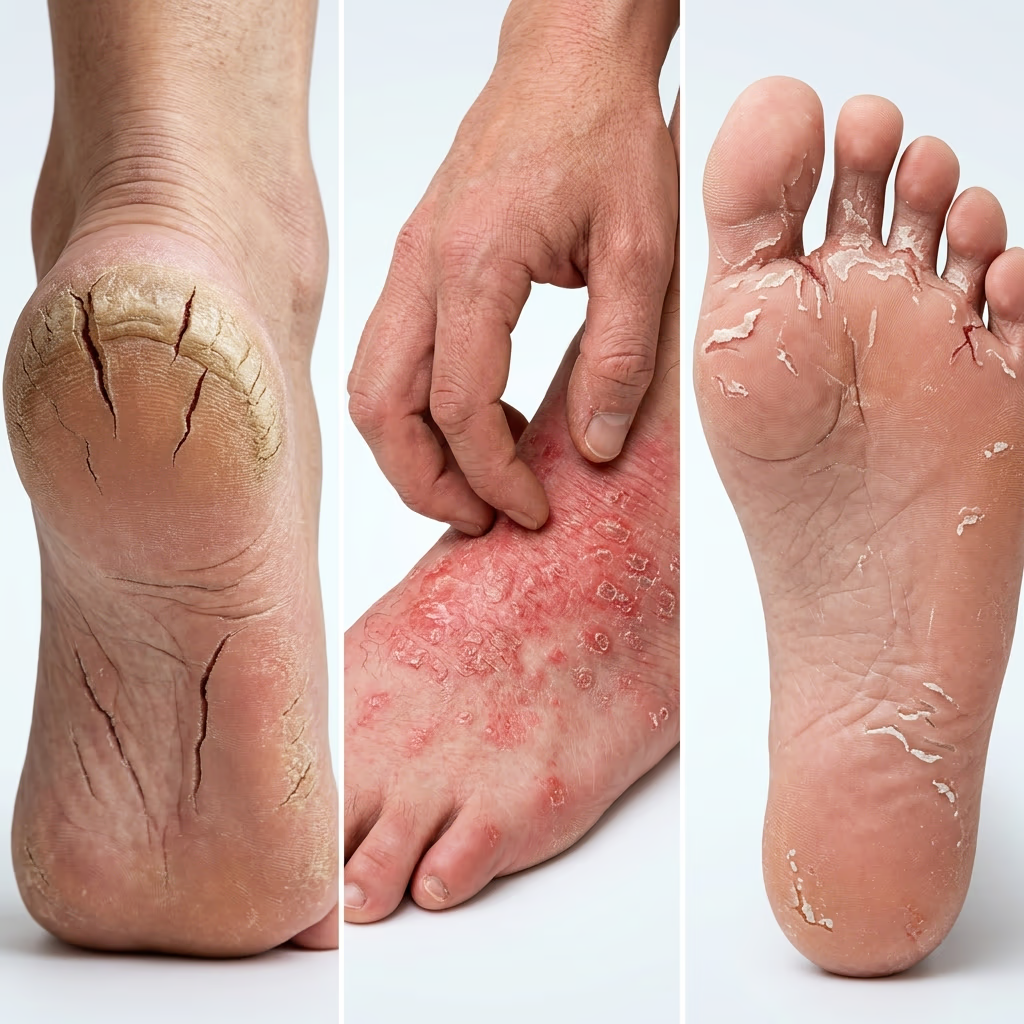
Cracked heels, eczema and athlete’s foot can cause similar symptoms, but the underlying problems are different. Ordinary cracked heels typically involve dry, thickened skin that splits under pressure. Eczema causes skin inflammation, often with itching, while athlete’s foot is a fungal infection that can cause scaling, peeling and cracks. Because symptoms overlap, appearance alone may not reliably identify the cause.
If your heels keep splitting, your feet are unusually itchy, or moisturisers aren’t helping, the pattern of symptoms can offer useful clues.
Cracked Heels vs Eczema vs Athlete’s Foot: What’s the Difference?
Cracked heels describe a break in the skin rather than a single disease. Dryness and repeated pressure are common contributors, but eczema, fungal infection and other skin conditions can also lead to fissures.
The location of the symptoms, surrounding skin changes and medical history can help distinguish between these possibilities.
Symptoms at a Glance
| Feature | Ordinary Cracked Heels | Foot Eczema | Athlete’s Foot |
|---|---|---|---|
| Main cause | Dry skin, callus and pressure | Inflammatory skin condition | Dermatophyte fungal infection |
| Appearance | Thickened skin with visible cracks | Dry, itchy or inflamed patches | Peeling, scaling, fissures or blisters |
| Itching | Often absent | Common | Common, but not always present |
| Typical location | Around heel edges | Various areas of the feet | Between toes, soles, sides or heels |
| Pain | Common when cracks deepen | Possible with inflamed or broken skin | Possible with irritation or fissures |
| Contagious? | No, when caused by dryness and pressure | No | Yes |
| Main treatment approach | Moisturising and pressure management | Skin care and inflammation control | Antifungal treatment |
These differences are useful starting points, not a substitute for diagnosis. Psoriasis and other inflammatory conditions can also resemble fungal foot infections.
DermNet identifies eczema, contact dermatitis and psoriasis among the conditions that can be confused with athlete’s foot.
Medical reference: DermNet — Tinea Pedis.
How to Tell if Cracked Heels Are Caused by Fungus
Athlete’s foot, medically known as tinea pedis, is often associated with peeling or scaling between the toes. However, some fungal infections spread across the soles and heels, where they can look like ordinary dry skin.
One example is moccasin-type tinea pedis, which produces widespread scaling across the sole and sides of the foot.
Unlike the classic rash between the toes, this presentation may resemble persistent dryness or thickened heel skin.
Signs That Suggest a Possible Fungal Infection
Look for patterns such as:
- Scaling or peeling between the toes
- Dry, powdery-looking skin across the soles
- Recurrent itching or burning
- Cracking around the sides of the feet or heels
- Symptoms that persist despite moisturising
- One foot being noticeably more affected than the other
None of these signs confirms athlete’s foot on its own.
Can Athlete’s Foot Cause Cracked Heels Without Itching?
Yes. Athlete’s foot does not always cause obvious itching.
A fungal infection involving the soles or heels may appear as persistent dry, thickened or scaly skin. Cracks can develop within these affected areas.
When the diagnosis is uncertain, a clinician may take a skin scraping for microscopy or fungal testing.
This is particularly useful when someone has repeatedly treated their feet as ordinary dry skin without improvement.
Can Eczema Cause Cracked Skin on Your Heels?
Eczema can affect the feet, causing dryness, itching, inflammation and sometimes painful skin fissures.
Unlike athlete’s foot, eczema is not caused by a contagious fungal infection.
There are several forms of eczema that can affect the feet, including atopic dermatitis, irritant contact dermatitis and allergic contact dermatitis.
Signs of Foot Eczema
Foot eczema may involve:
- Recurring itching
- Dry, rough or flaky skin
- Inflammation or changes in skin colour
- Cracks that become sore or painful
- Thickened areas caused by repeated scratching
- Small blisters in some types of eczema
The appearance varies according to the type of eczema, its severity and the person’s skin tone.
Can Footwear Cause Eczema?
Certain footwear materials can trigger allergic contact dermatitis in susceptible people.
Possible triggers include rubber chemicals, adhesives, dyes and leather-processing substances.
The distribution of irritation may provide useful clues. For example, a rash occurring mainly where a shoe contacts the foot can raise suspicion of contact dermatitis.
However, footwear friction and moisture can also cause irritation without a true allergy.
If a rash repeatedly returns after wearing particular shoes, a GP or dermatologist can assess whether further investigation, such as patch testing, is appropriate.
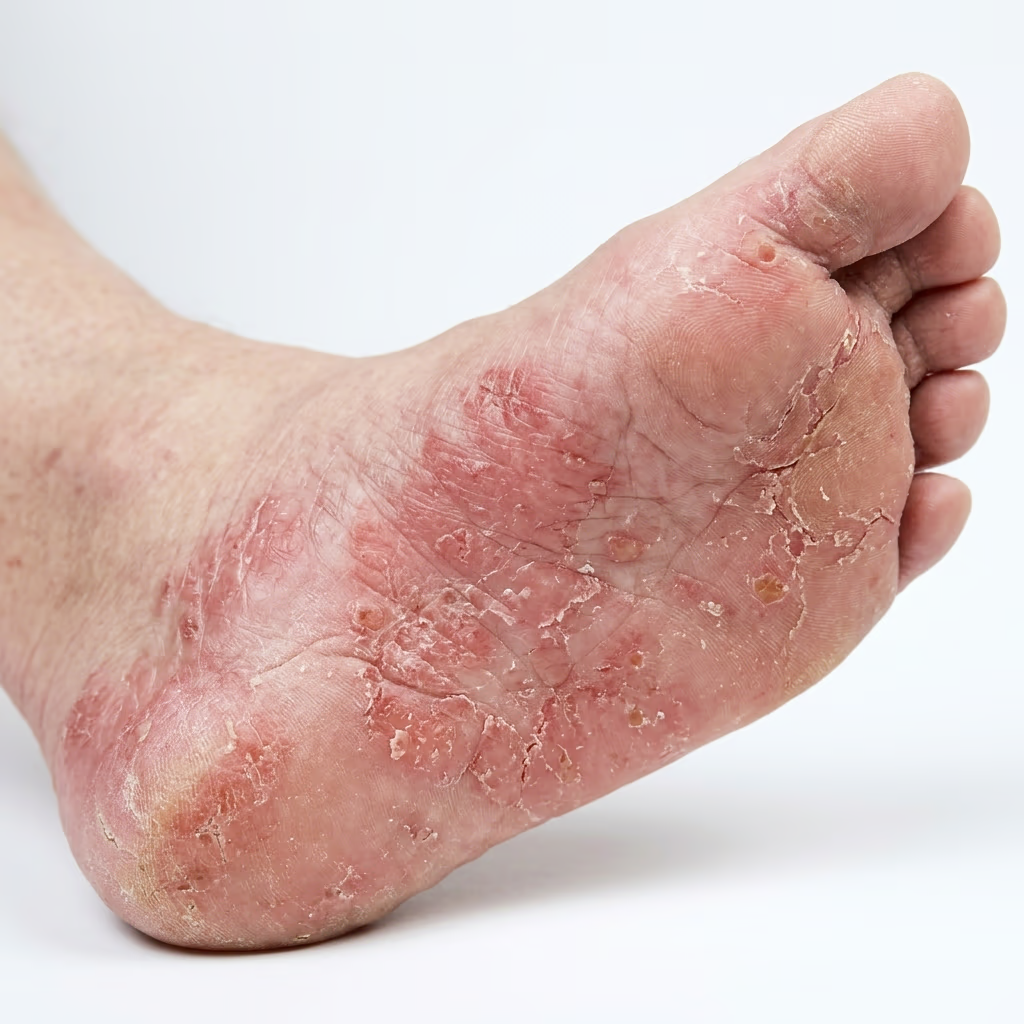
Eczema or Athlete’s Foot: Why the Distinction Matters
The two conditions require different treatments.
Eczema may need moisturisers, trigger avoidance and prescribed anti-inflammatory medication. Athlete’s foot requires antifungal treatment.
Using a steroid cream alone on an undiagnosed fungal infection can change its appearance and potentially worsen the problem.
Persistent inflammation, scaling or itching should therefore be assessed rather than repeatedly treated by trial and error.
Can Footwear and Seasonal Habits Make Cracked Heels Worse?
Yes. Footwear, skin hydration and daily activities can influence the development of heel cracks.
In Australia, thongs and other open-backed shoes are common choices during warmer weather. They may be comfortable for casual use, but they do not provide the same support around the heel as enclosed footwear.
When thick callus is already present, repeated pressure can contribute to skin splitting.
Why Open-Backed Shoes Can Contribute to Heel Cracks
The heel has a natural cushioning pad beneath the skin.
When weight is placed on the foot, this tissue spreads slightly. Without adequate support around the heel, the outward movement can increase tension on thickened skin.
Over time, callused skin may split, producing a heel fissure.
DermNet identifies prolonged standing, dry skin and open-backed footwear among the factors associated with cracked heels.
Moisture and Fungal Infection Are Different Concerns
Athlete’s foot involves fungal infection rather than mechanical pressure alone.
Warm, moist conditions inside footwear can favour fungal growth. Fungi can also spread through contaminated communal surfaces, including shared showers and changing facilities.
Practical measures include drying between the toes, changing damp socks, allowing footwear to dry and wearing protective sandals in communal wet areas.
Cracked heels are not exclusively a summer or winter problem. The underlying skin condition and everyday habits are more important than the season alone.
Medical references: DermNet — Cracked Heel and DermNet — Tinea Pedis.
How Are Cracked Heels, Eczema and Athlete’s Foot Treated?
The treatment approach changes according to the underlying problem.
Ordinary Cracked Heels
For uncomplicated heel fissures, care generally focuses on improving skin hydration and reducing pressure.
Practical measures include:
- Applying a suitable heel moisturiser regularly.
- Choosing supportive footwear where appropriate.
- Avoiding prolonged friction or pressure where possible.
- Avoiding cutting or aggressively filing thick skin at home.
- Seeking podiatry care for painful, deep or recurring cracks.
Some heel balms contain urea or other ingredients that help soften thickened skin. Stronger formulations can irritate open fissures, so professional guidance may be needed.
Deep cracks can also require protective dressings or professional callus management.
Learn more about cracked heels assessment and treatment at HealthiClinic.
Foot Eczema
Eczema treatment focuses on maintaining the skin barrier, reducing inflammation and avoiding relevant triggers.
Depending on the condition, a GP or dermatologist may recommend fragrance-free moisturisers, changes to skin-care products, avoiding identified allergens or prescribed anti-inflammatory treatment.
An unexplained foot rash should not automatically be treated as eczema, particularly if fungus is a possibility.
Athlete’s Foot
Athlete’s foot is commonly treated with topical antifungal medication.
Patients should follow the recommended treatment instructions and duration. Keeping feet dry, changing damp socks and avoiding shared footwear can also help.
Infections that are extensive, recurrent or unresponsive to appropriate treatment may require medical review, diagnostic testing or prescription medication.
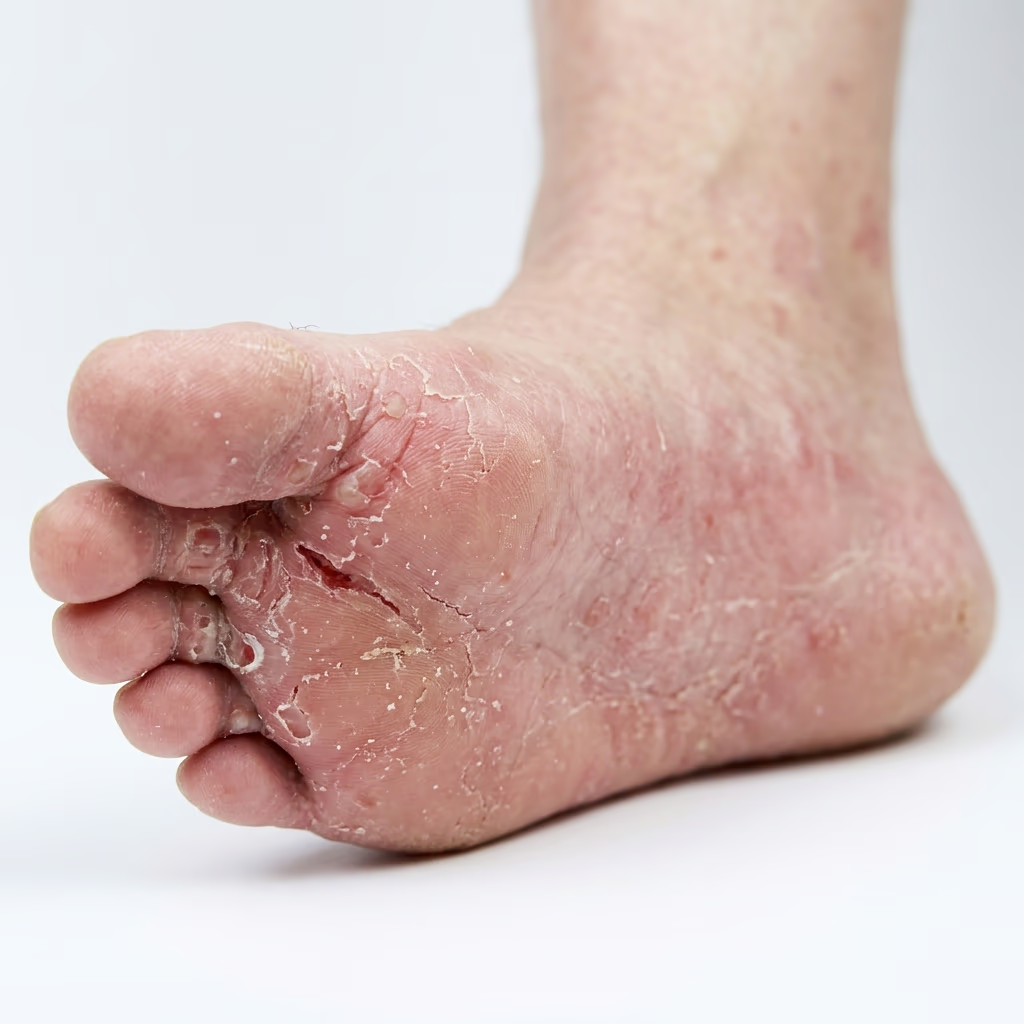
Why Do Cracked Heels Keep Coming Back?
Cracked heels often return when thickened skin, repeated pressure or poorly fitting footwear continue to place stress on the same area.
Moisturiser can improve dryness, but it cannot always address the mechanical factors contributing to skin breakdown.
If cracks repeatedly develop in the same location, a podiatrist can examine callus, footwear and pressure distribution.
Persistent peeling or itching raises additional possibilities, including eczema and fungal infection.
Rather than repeatedly treating the visible crack, it is useful to identify the factors that are causing it to recur.
What Does a Podiatrist Look for When Examining Cracked Heels?
A podiatrist examines the depth and location of the fissures, surrounding callus, footwear and factors that could affect healing.
These findings can indicate whether the problem is primarily mechanical or whether another condition warrants investigation.
For example:
- Thick callus around a heel fissure can suggest repeated pressure and mechanical stress.
- Scaling between the toes or across the sole raises the possibility of a fungal infection.
- Persistent itchy inflammation can suggest eczema or another inflammatory skin disorder.
- Deep cracks with redness, warmth or discharge require assessment for possible infection.
A podiatrist may also consider a patient’s medical history, circulation, sensation and any previous treatments.
If the skin findings are atypical or fungal infection is suspected, testing or referral to another healthcare professional may be appropriate.
Why Diabetes and Poor Circulation Require Extra Attention
People with diabetes, reduced sensation or poor circulation can face greater risks when foot skin breaks down.
A small fissure may be harder to detect when sensation is reduced, and impaired healing can increase the risk of complications.
These patients should seek early professional advice about new cracks or wounds rather than attempting to remove callus or manage deep fissures themselves.
Podiatry Expertise at HealthiClinic: Dr Damien Lafferty
HealthiClinic’s podiatry services in Greenwich, Sydney, include care provided by Dr Damien Lafferty, Podiatric Surgeon and General Podiatrist.
Dr Lafferty has 38 years of experience in podiatry, including 29 years in podiatric surgery. He also spent 19 years teaching within the University of Newcastle’s podiatry program.
His clinical background includes general podiatry, persistent heel pain, lower-limb biomechanical assessment and complex foot conditions.
Why a Detailed Foot Assessment Matters
Cracks and discomfort around the heel can develop for different reasons. An examination may need to consider both the skin itself and the mechanical forces acting on the foot.
For instance, a fissure surrounded by thick callus calls for a different assessment from a widespread peeling rash between the toes.
Dr Lafferty’s published clinical approach emphasises explaining findings clearly and considering conservative care alongside procedural options where relevant.
His practice includes footwear assessment, biomechanical evaluation and management of persistent foot problems.
For people with recurring heel fissures, an appropriate podiatry assessment can help clarify whether pressure management, skin care or further investigation should be considered.
Professional background: Dr Damien Lafferty — HealthiClinic Practitioner Profile.
When Should You See a Podiatrist or Doctor for Cracked Heels?
Arrange an assessment if your heel cracks are painful, deep, bleeding, repeatedly returning or failing to improve with appropriate care.
Persistent itching, scaling or inflammation also deserves attention, particularly when you are unsure whether the cause is eczema or a fungal infection.
Warning Signs That Need Prompt Care
Contact a healthcare professional if you notice:
- Increasing redness, warmth or swelling
- Pus or discharge from a crack
- Worsening pain
- Deep or repeatedly bleeding fissures
- A wound that is not healing
- Skin breakdown in someone with diabetes or poor circulation
Rapidly spreading redness, fever or significant illness associated with a foot wound requires urgent medical attention.
Should You See a Podiatrist, GP or Dermatologist?
A podiatrist is well placed to assess heel fissures, callus, footwear-related pressure and foot risk factors.
A GP can evaluate suspected fungal infection, eczema or skin infection and determine whether medical treatment is needed.
A dermatologist may be appropriate for complex or persistent inflammatory skin conditions.
These services can complement one another when a foot problem has more than one contributing cause.
Cracked or Irritated Heels? Find the Right Care in Sydney
Dry skin, eczema and athlete’s foot can produce similar symptoms, but treatment is not always the same.
If your heels repeatedly crack, become painful or develop persistent scaling, a professional foot assessment can help identify contributing factors and determine suitable next steps.
HealthiClinic offers podiatry services in Greenwich, Sydney, including assessment and management of common foot and heel concerns.
Find out more:
- Cracked Heels Assessment and Treatment
- HealthiClinic Podiatry Services
- Meet Dr Damien Lafferty
- Contact HealthiClinic
Medical References
- DermNet — Cracked Heel. Clinical information on causes, symptoms, callus, pressure and heel fissure management.
- DermNet — Tinea Pedis. Clinical information on fungal foot infections, different presentations, diagnosis and treatment.
- DermNet — Guidelines for the Diagnosis and Assessment of Eczema. Information on eczema assessment and differential diagnosis.
- HealthiClinic — Dr Damien Lafferty’s Professional Profile. Professional experience and clinical scope.
- HealthiClinic — Podiatry Services. Information about local podiatry assessment and care.
Publisher: HealthiClinic
Prepared: 9 November 2026
Medical disclaimer: This article provides general educational information and does not replace individual medical advice, diagnosis or treatment. Seek professional care for persistent symptoms, suspected infection or foot wounds.
Can athlete’s foot cause cracked heels without itching?
Yes. Some fungal infections cause scaling and dryness across the soles or heels without significant itching. Moccasin-type tinea pedis can resemble ordinary dry skin and may require testing when the diagnosis is unclear.
How do I know if my cracked heels are fungal?
Scaling between the toes, persistent peeling across the soles and recurring symptoms despite moisturising can suggest fungal infection. However, these signs are not definitive. A clinician may use skin scrapings to confirm the diagnosis.
Can eczema and athlete’s foot occur together?
Yes. Eczema and fungal infection can affect the same person, sometimes at the same time. Each condition may require a different treatment approach.
Is it safe to use moisturiser on athlete’s foot?
Moisturiser can help accompanying dryness, but it will not eliminate the fungal infection. Thick creams between the toes may also retain moisture. Seek advice on suitable skin care alongside antifungal treatment.
Can cracked heels become infected?
Yes. Deep fissures can allow microorganisms to enter damaged skin. Increasing redness, warmth, swelling, discharge or pain can indicate infection and should be medically assessed.
When should I see a podiatrist for cracked heels?
Consider podiatry care if cracks keep returning, become painful, develop thick callus or do not improve with appropriate self-care. Seek advice promptly if you have diabetes, reduced sensation or circulation problems.